
Erdem Moralıoğlu usually begins with a woman from history. This season, he chose a man who became one onstage.
Vander Clyde Broadway performed as Barbette, the glamorous trapeze artist who transfixed 1920s and ’30s Paris. The illusion lasted until the final reveal, when Barbette removed his wig. Jean Cocteau became a friend and champion; Erdem found a collection in the charged space between the entrance and the unveiling.
The result is not a neat exercise in masculine versus feminine. It is a wardrobe caught mid-transformation: stiff collars, boxer shorts and checked overcoats interrupted by crystal bras, satin bodysuits, collapsing bustles and feathers large enough to require their own dressing room.
The tuxedo loses custody of itself
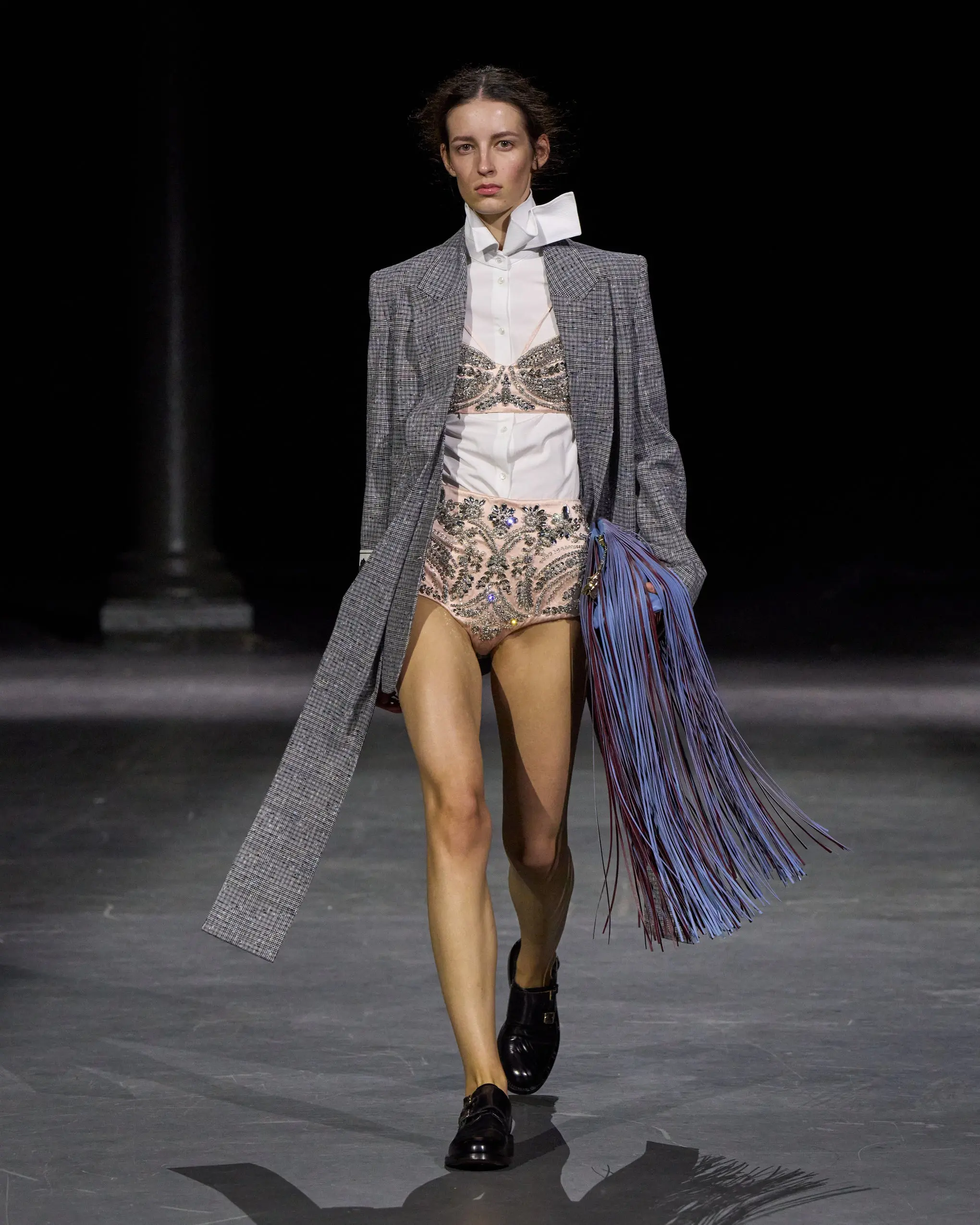
At first, the tailoring appears to be in charge. Long grey coats, white shirts and abbreviated striped shorts establish the sober language of men’s evening dress. Then the showgirl starts borrowing things.
A checked coat opens over embellished briefs. A flyaway collar frames a crystal bra. The proportions stay mannish while everything beneath them becomes progressively more exposed, more decorated and more delighted with itself.
The cleverness is in the power balance. This is not lingerie used to soften tailoring, or tailoring used to make lingerie respectable. Neither side behaves. A military parka sprouts a sculptural collar and swings open over jewelled underwear; sensible shoes arrive beneath gowns that look capable of floating away.
The showgirl did not borrow the tuxedo. She took it out and improved its evening.
Romance, with its corsetry showing
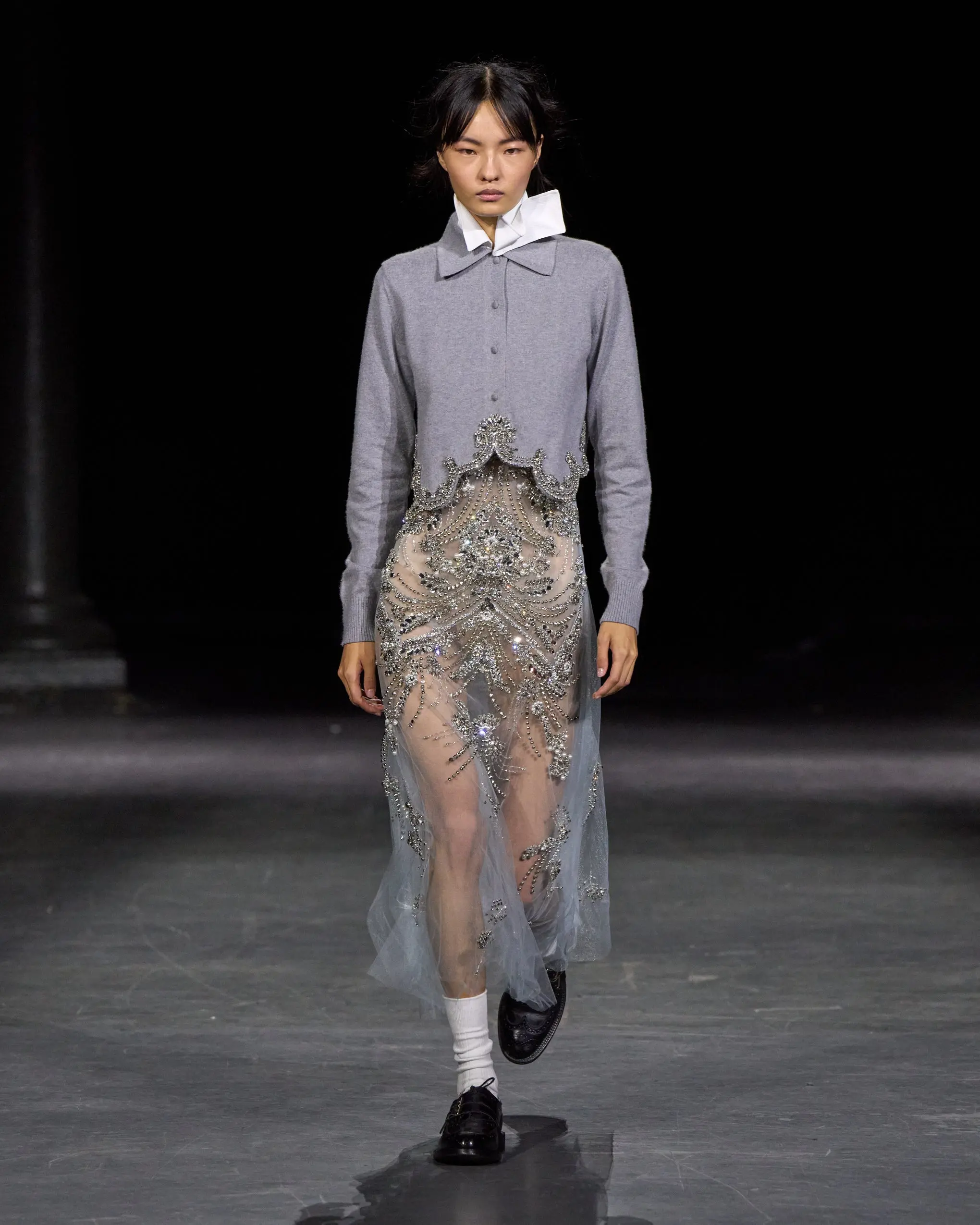
Erdem’s familiar romance is still here—flowered silks, lace, crystal embroidery and gowns shaped like opening blooms—but it has been loosened and exposed.
Bra cups sit outside dresses. Boning becomes decoration. Slips fall away from the body as if the wearer has just stepped out of one costume and has not yet decided on the next. Even the prettiest dress, a yellow-and-grey confection covered in tiny flowers, is grounded by black brogues.
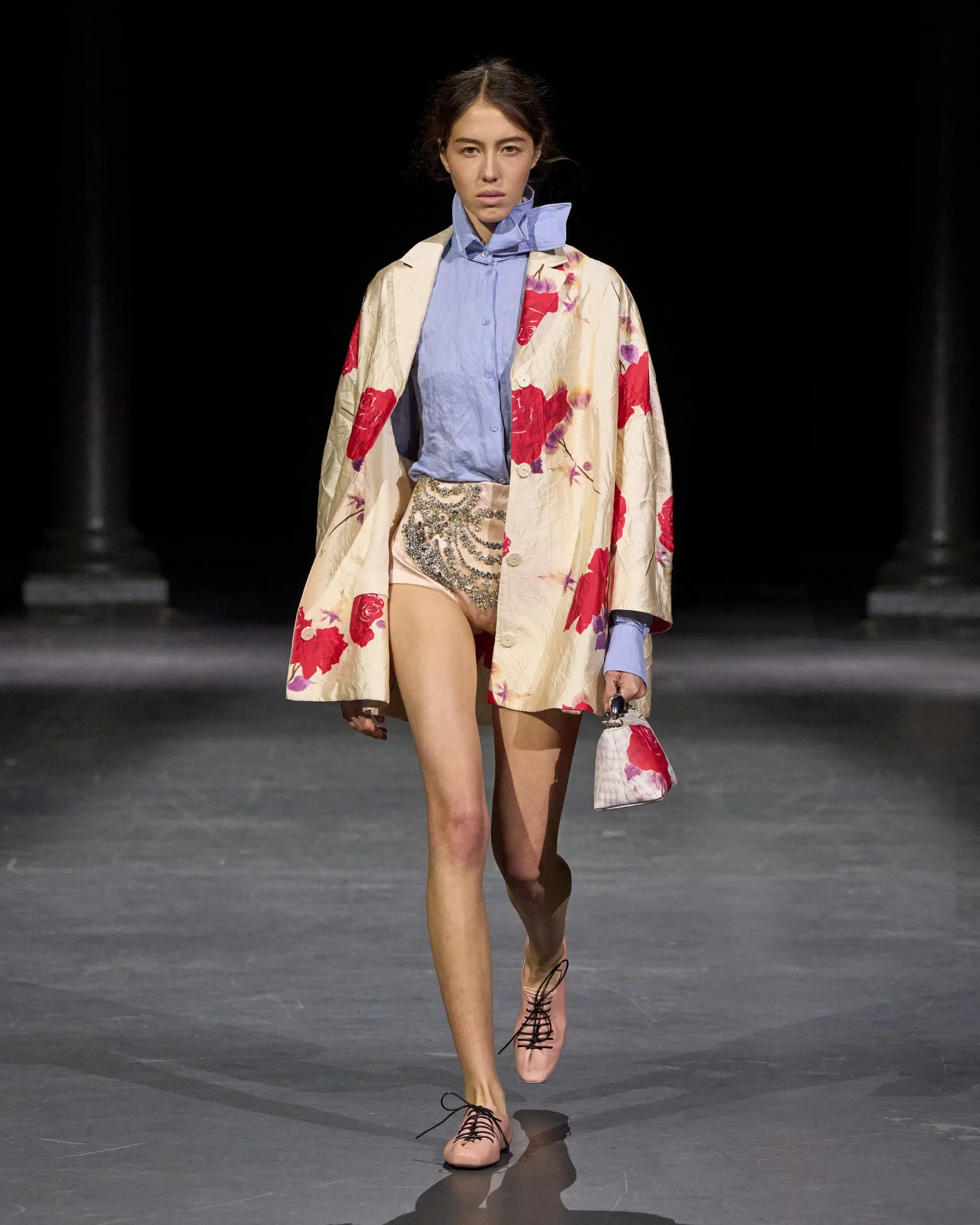
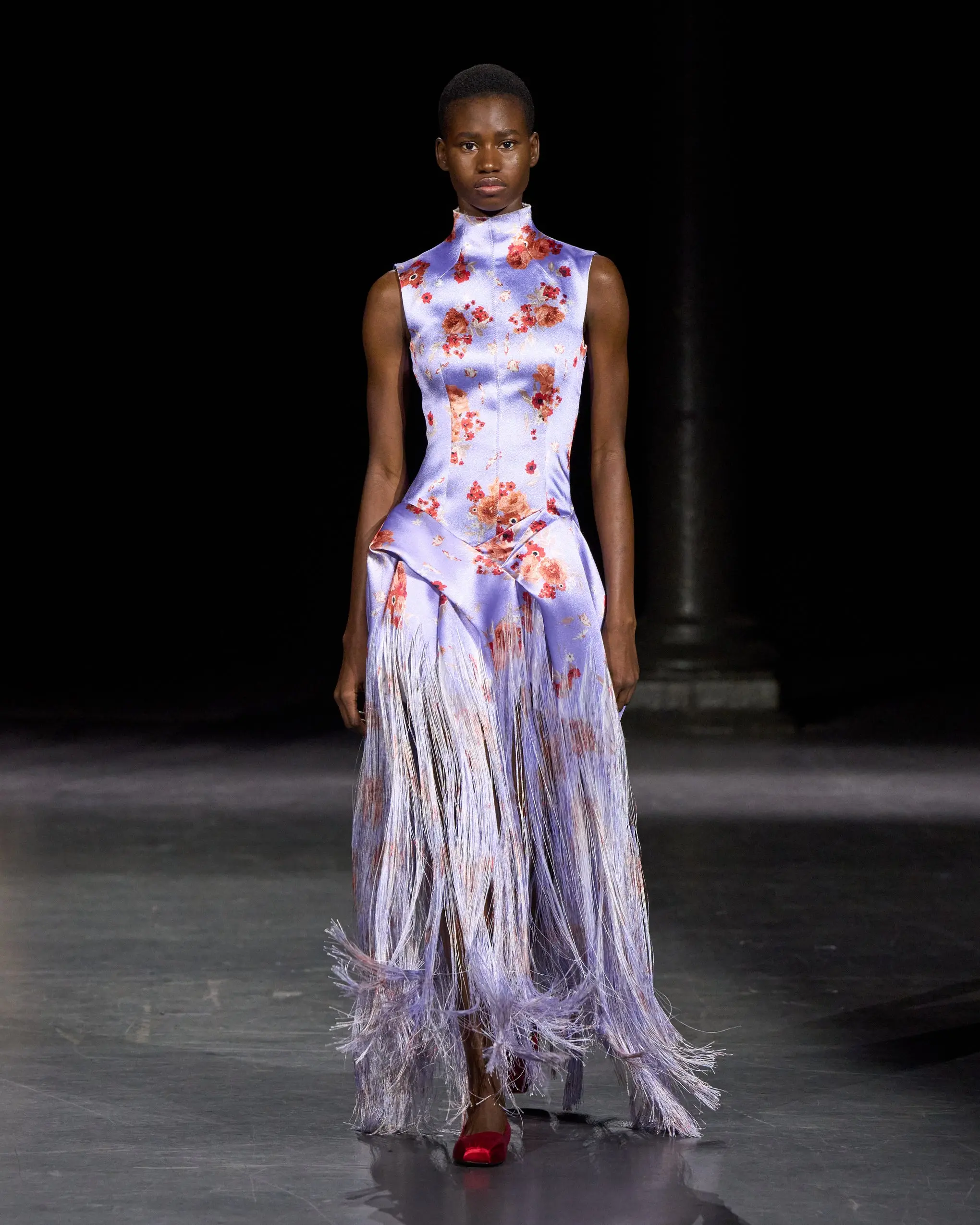
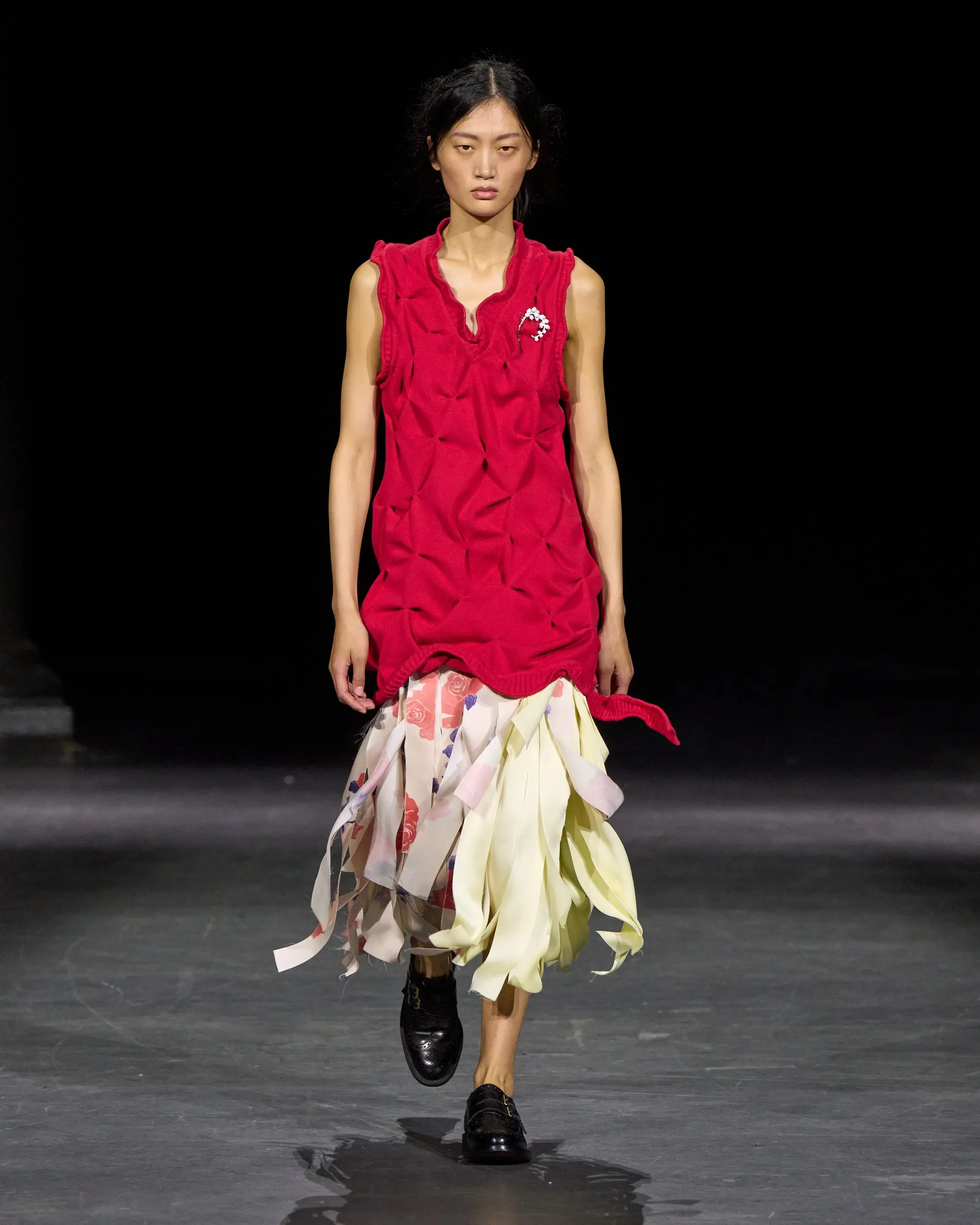
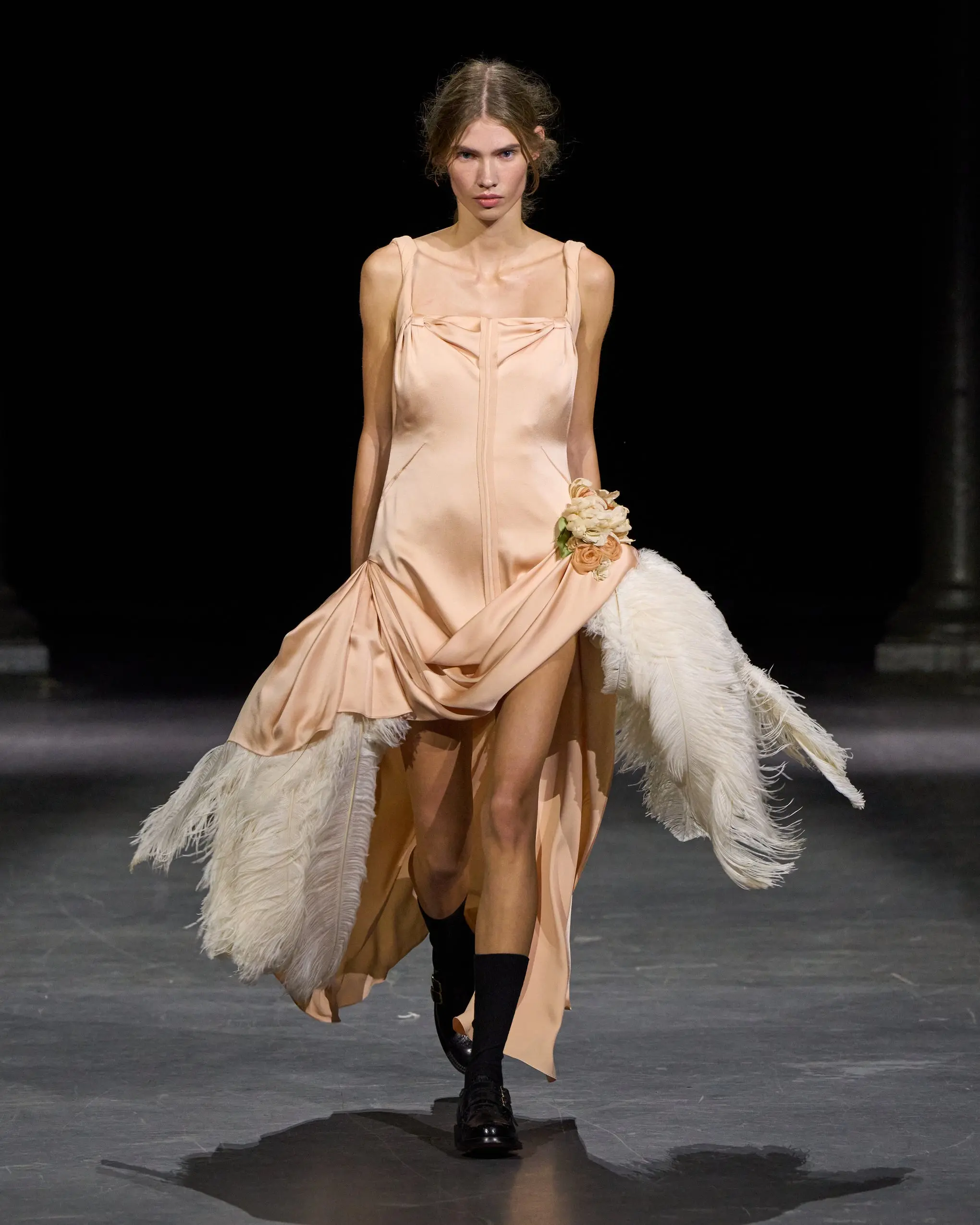
The floral-fringed dresses are especially good. Their bodies are tightly controlled, then the skirts dissolve into movement. They recall Barbette in the air without turning the reference into costume: suspension translated into cloth.
Then the feathers arrive
The final passage stops pretending this is daywear.
An icy-blue robe swallows the body in satin and feathers. Black lace, shredded flounces and dropped waists turn Erdem’s usual prettiness nocturnal. A peach ballgown is grand but slightly disobedient, its proportions made stranger by flat black shoes.
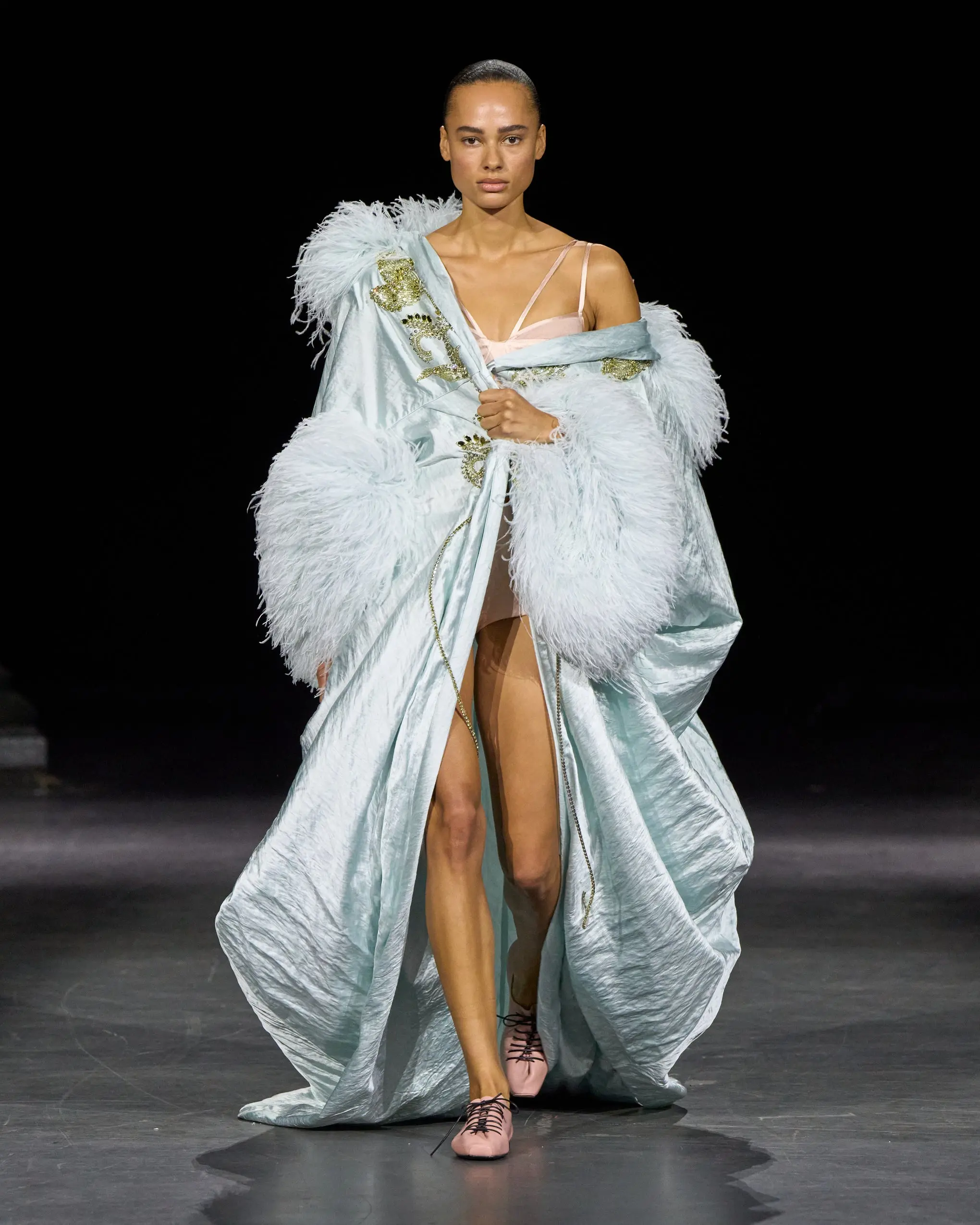
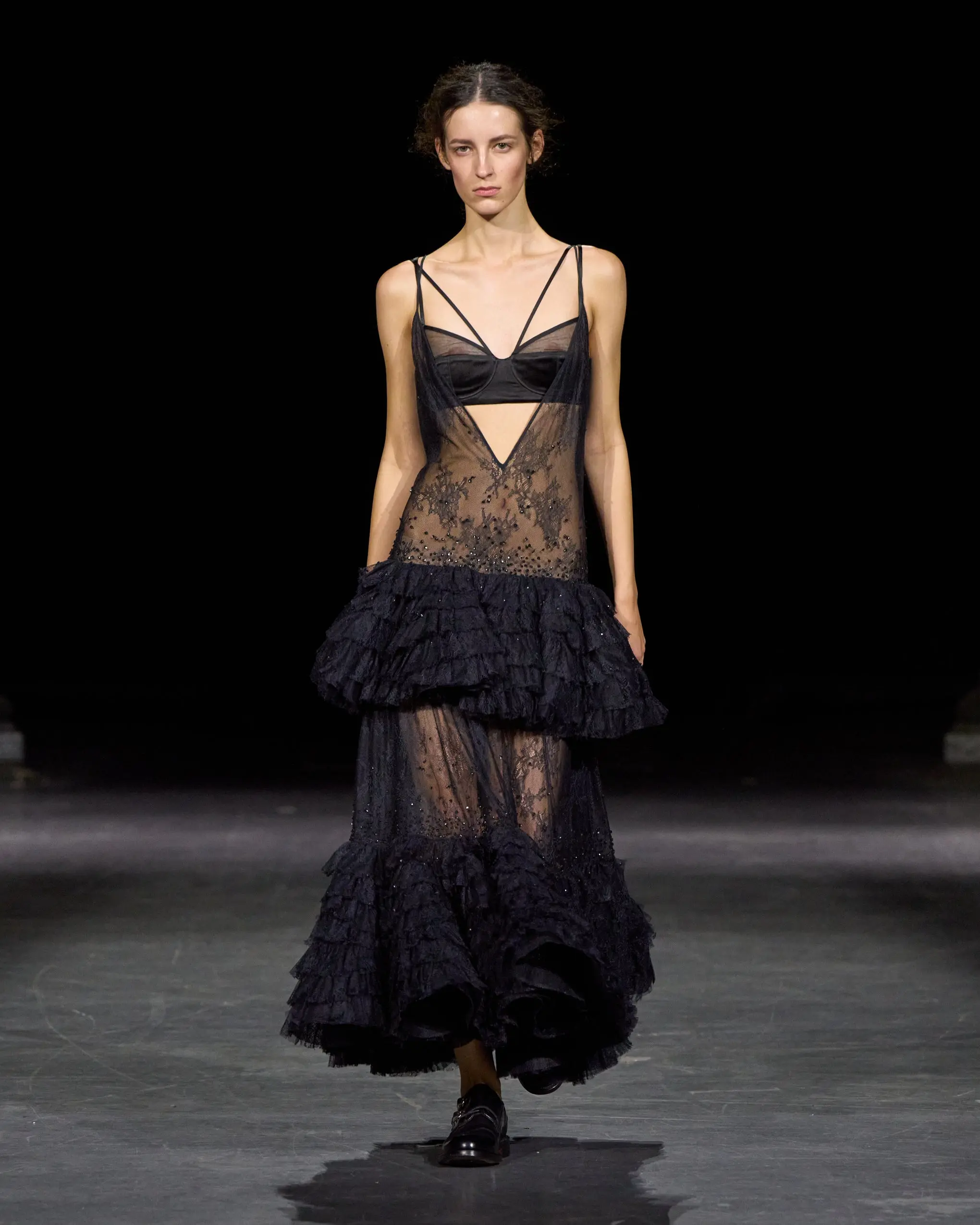
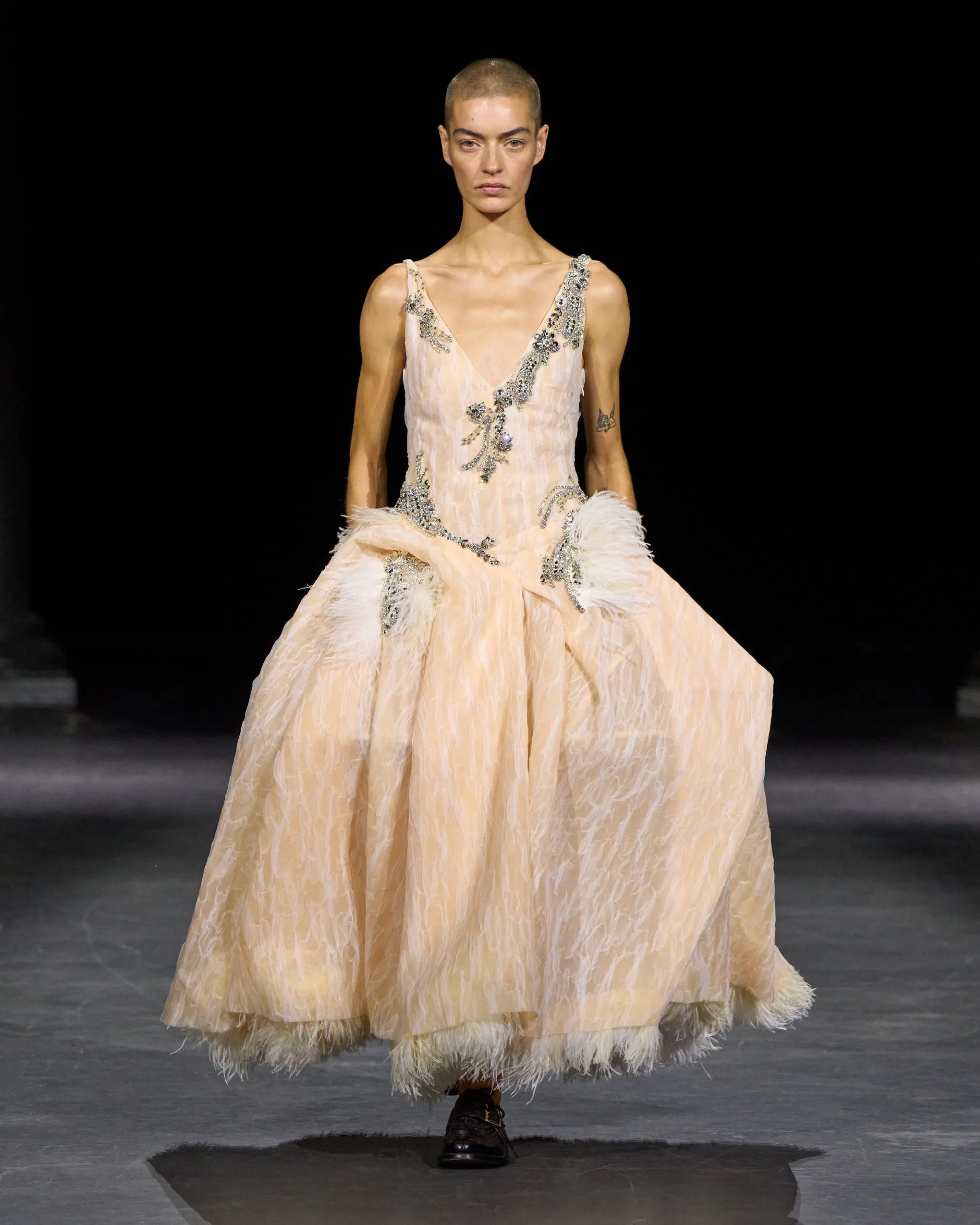
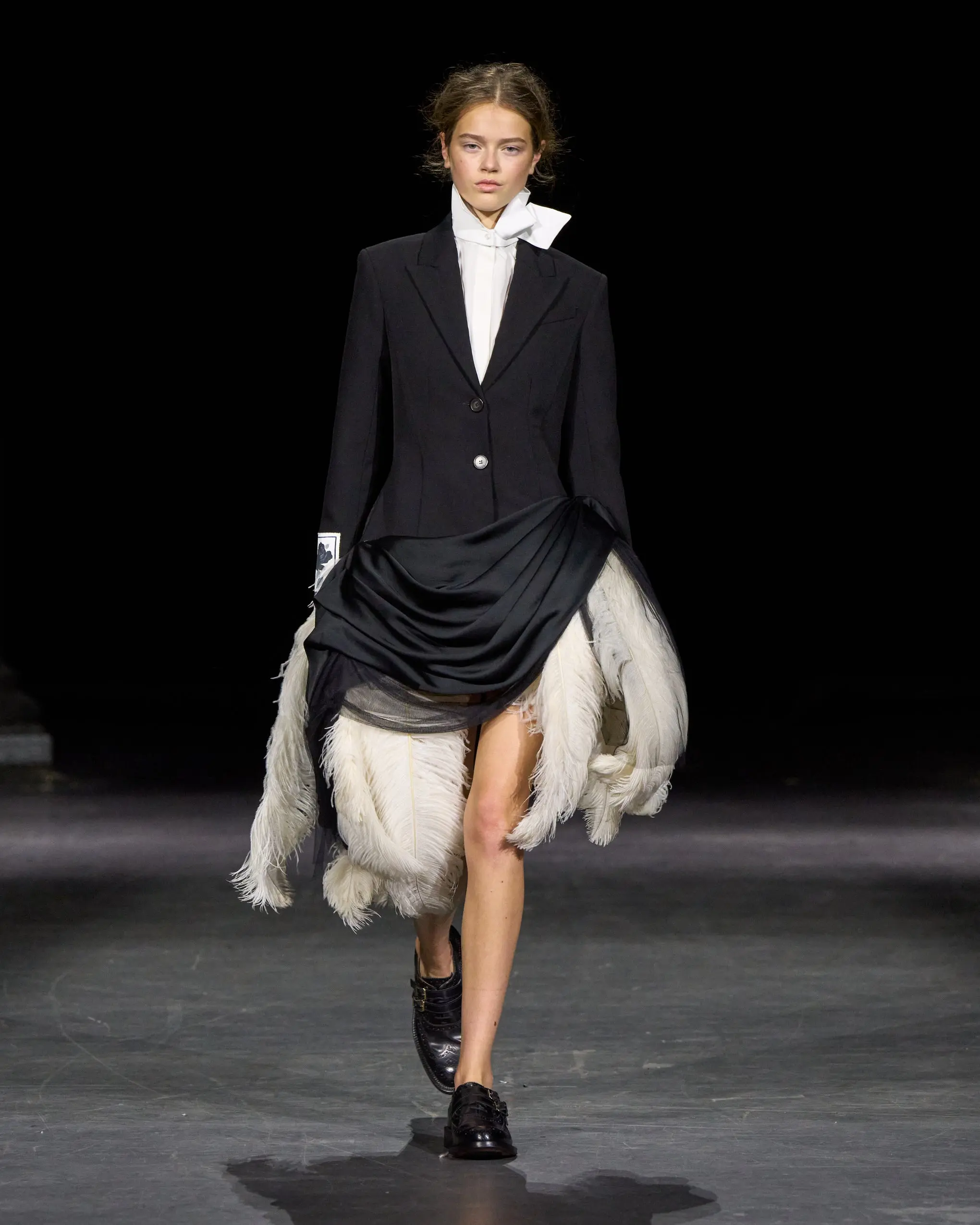
By Look 40, tailoring and spectacle have stopped taking turns. A perfectly serious black tuxedo jacket sits above a draped black skirt and an eruption of white ostrich feathers. It is the whole collection in one outfit: restraint losing beautifully.
The Wonder verdict
The historical reference is rich, but the clothes do not require a programme note to work. That matters. Gender can become a vague luxury-fashion slogan; here, the tension is visible in every collar, bra, bustle and pair of brogues.
It is also simply a pleasure to see Erdem let the polish slip. The craft remains exacting, but the mood is freer, sexier and occasionally funny. Nothing has been made “genderless” by sanding away its personality. Masculine and feminine are allowed to collide at full volume.
The showgirl stole the tuxedo. The tuxedo has never had a better night.
Sources & further viewing
Erdem Spring/Summer 2027 collection · Wallpaper*: London Fashion Week SS27 review
Runway images: Courtesy of Erdem.