
Milan didn’t fix luxury in seven days. It did remember what fashion is actually for.
Not merely clothes. Not merely content. Desire—with enough of a plan behind it that someone might eventually buy something.
Milan Remembered What Fashion Is For
This was not a week of one grand aesthetic decree. It was more useful than that.
The best collections were specific. Prada made a thesis out of one garment. Gucci turned the point of sale into the point of the show. Bottega Veneta made extraordinary craft feel easy enough to live in.
Even the louder moments worked best when there was a product at the centre of them. Milan’s proposition was simple: the dream can be strange, funny or extravagant, but it still needs an object you remember the next morning.
Prada Held a Referendum on the Skirt
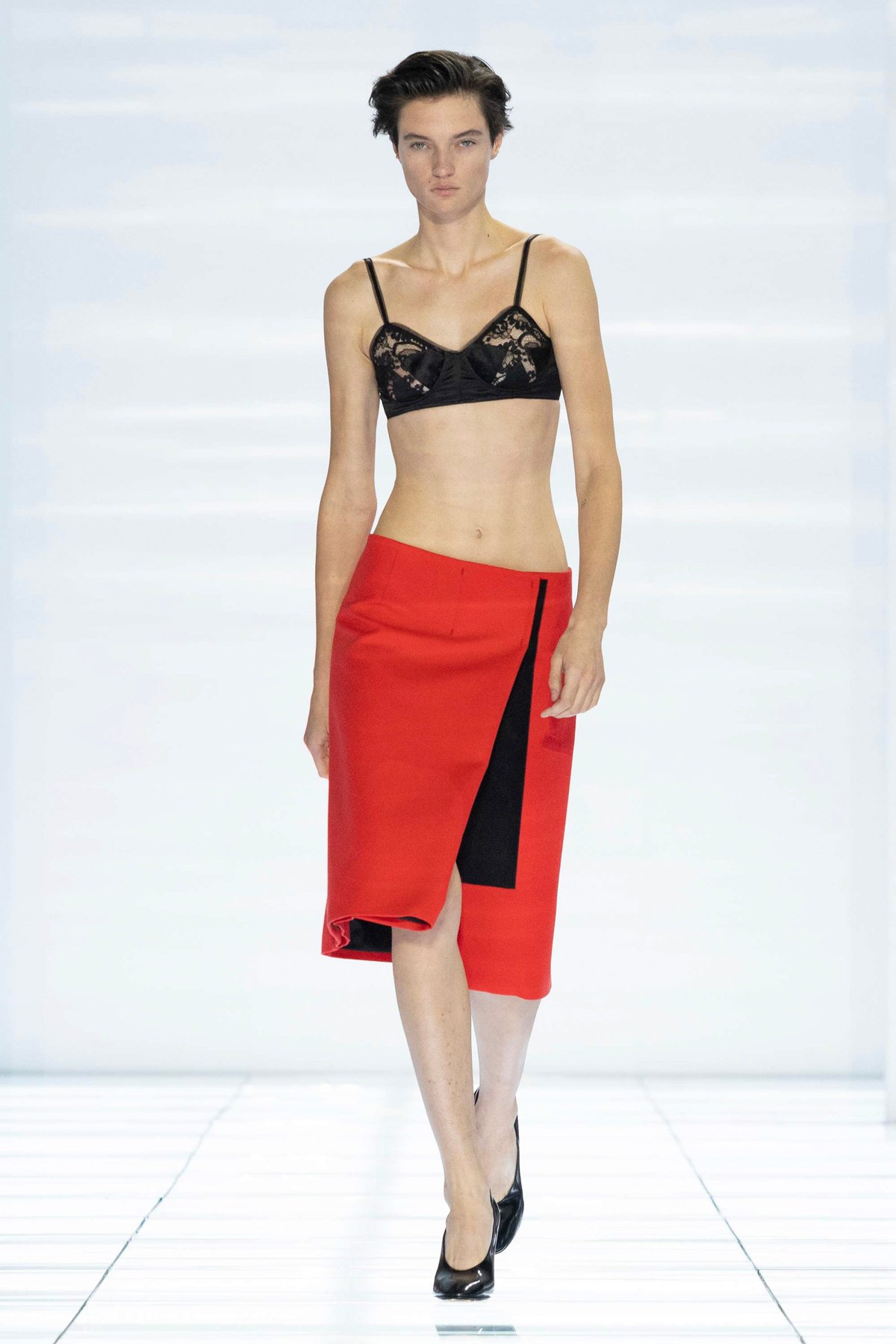
Every one of Prada’s 63 looks began with a skirt. Knee-length, pleated, wrapped, split, made from nylon or held away from the body like a half-finished crinoline.
On paper, that sounds like a limitation. On the runway, it became an argument for focus.
The clever part was the styling: tiny bandeaux, lace bras, serious bags and narrow pumps. Familiar things, put together just awkwardly enough to feel new.
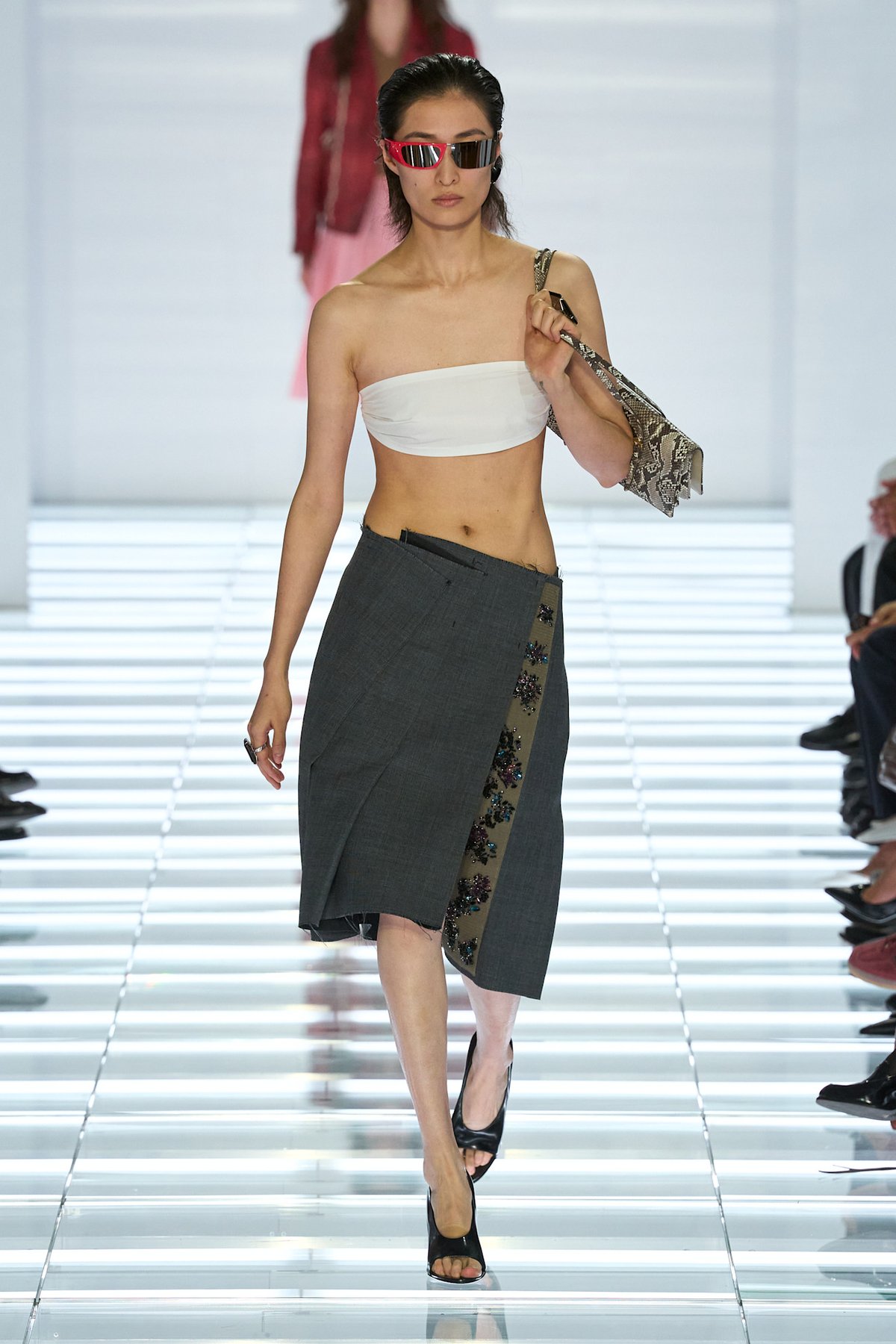
This is the kind of runway idea that travels. Expect the mid-length skirt to move from fashion-week talking point to an actual wardrobe category—especially worn with almost nothing on top and a very deliberate bag.
Gucci Put the Store on the Runway
Demna’s Gucci show took place inside a replica of the house’s new retail concept, complete with racks, shelves and Gucci staff.
It was blunt, slightly absurd and completely honest. This is a luxury business. The clothes are supposed to end up in shops.
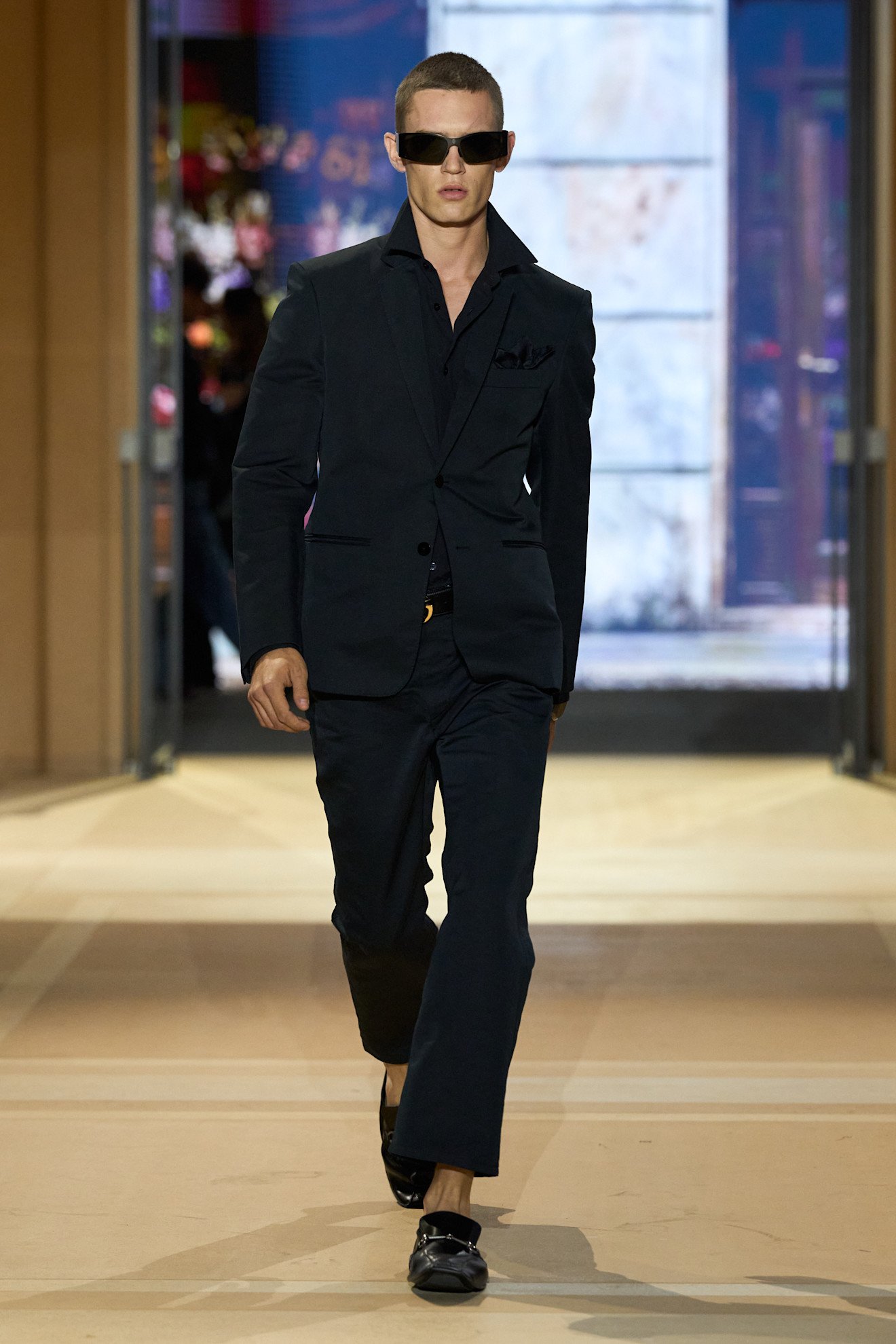
The collection moved between equestrian jackets, bourgeois tailoring, rugby shirts, tartan, denim and fluid evening dresses. Less a single Gucci woman than a wardrobe of Gucci identities.
That breadth could have felt vague. The store framing made it coherent: Gucci as a place where you choose who you would like to be today.
The New Guard Is Becoming Legible
The endless creative-director reshuffle is finally producing something more useful than appointment news.
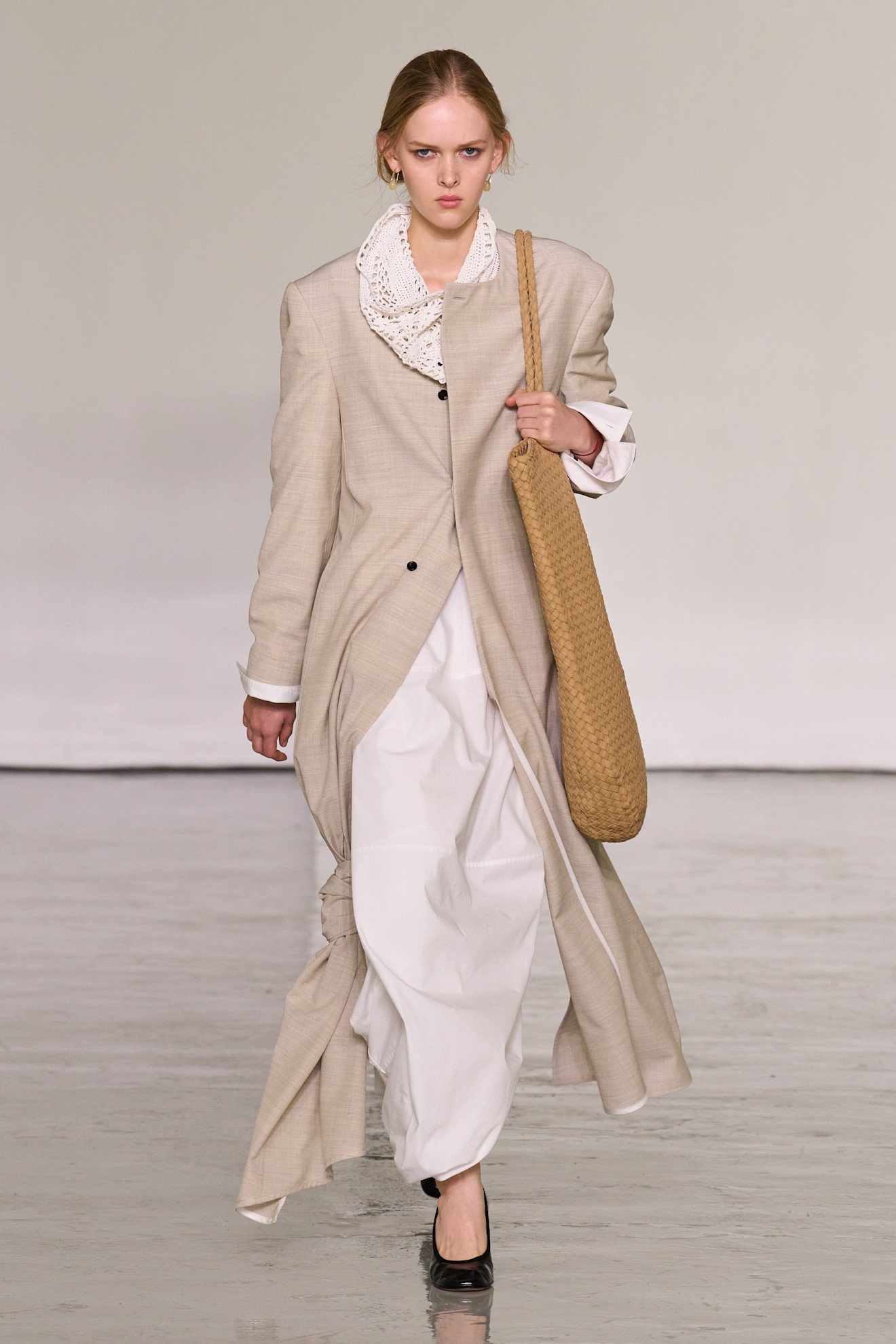
Louise Trotter’s Bottega Veneta felt lighter and more human: relaxed tailoring, soft leather, raffia, macramé and enormous woven bags that made the craft visible without making it precious.
At Jil Sander and Marni, newer creative leadership also began to read as a point of view rather than a press release. That matters. A house becomes interesting again when you can recognise its logic without reading the show notes.
A Show Still Has to Show Us Something
Moschino and Diesel supplied the spectacle. Not every gag needs to become a trend, but fashion loses something when every runway is designed to be tasteful, tasteful and then tasteful again.
The useful lesson is not “be louder.” It is “be memorable on purpose.” A strong show creates an image people want to pass around—and an object they want to look up afterwards.
The Objects That Mattered
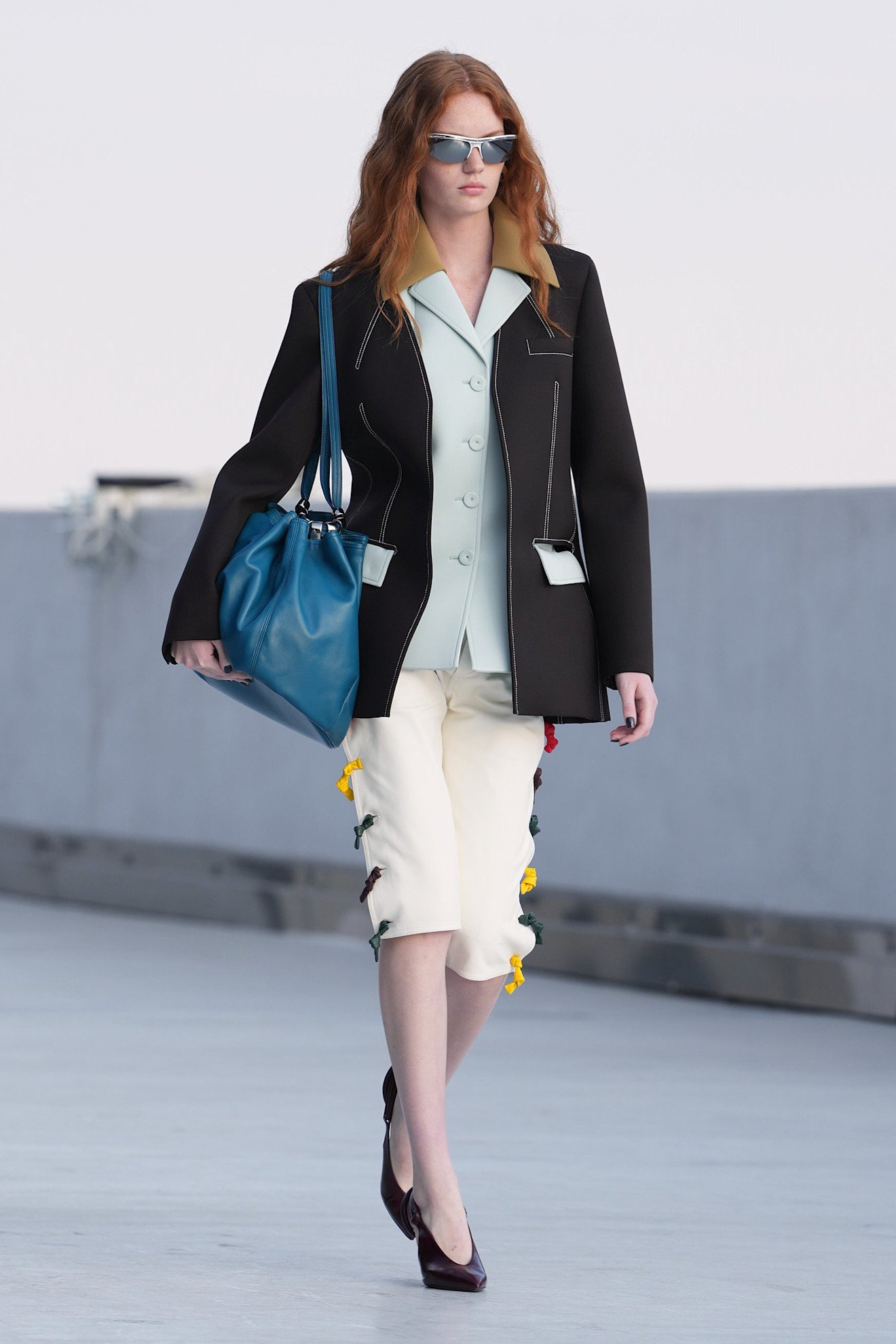
Prada’s skirts. Bottega’s oversized woven bags and leather flowers. Gucci’s exaggerated horsebit hardware. The narrow pump. The fitted jacket. The suddenly unavoidable flash of bra.
None is a fully formed shopping trend yet. Together, they point away from anonymous minimalism and towards clothes with a visible idea.
For Wonder, that is the commercial opportunity: not a page of “Milan trends”, but sharp edits built around one useful proposition. The new skirt. The serious bag. The jacket that has remembered the waist.
Behind the Fantasy, the Business
Milan’s confidence arrived against a less comfortable backdrop.
Italy has pledged €100 million in support for its fashion sector. Dolce & Gabbana is restructuring under the weight of substantial debt. And the future shape of Giorgio Armani’s company remains one of the industry’s biggest succession stories.
That does not make the runway frivolous. It makes the runway more important. When growth is difficult, a house needs a reason to be chosen—and “beautiful but interchangeable” is not one.
The Wonder Verdict
Milan didn’t deliver one neat trend report. Good.
It delivered something more valuable: proof that commercial clothes needn’t be boring, that craft can still look modern and that spectacle works best when there is something genuinely desirable at the centre of it.
The fantasy has to sell. But first, it has to make us feel something.
Sources & further reading
Vogue Business: Milan SS27 takeaways · Gucci SS27 collection · Bottega Veneta SS27 collection
Runway imagery: Launchmetrics Spotlight and courtesy of Gucci, via Fashionsnap.